
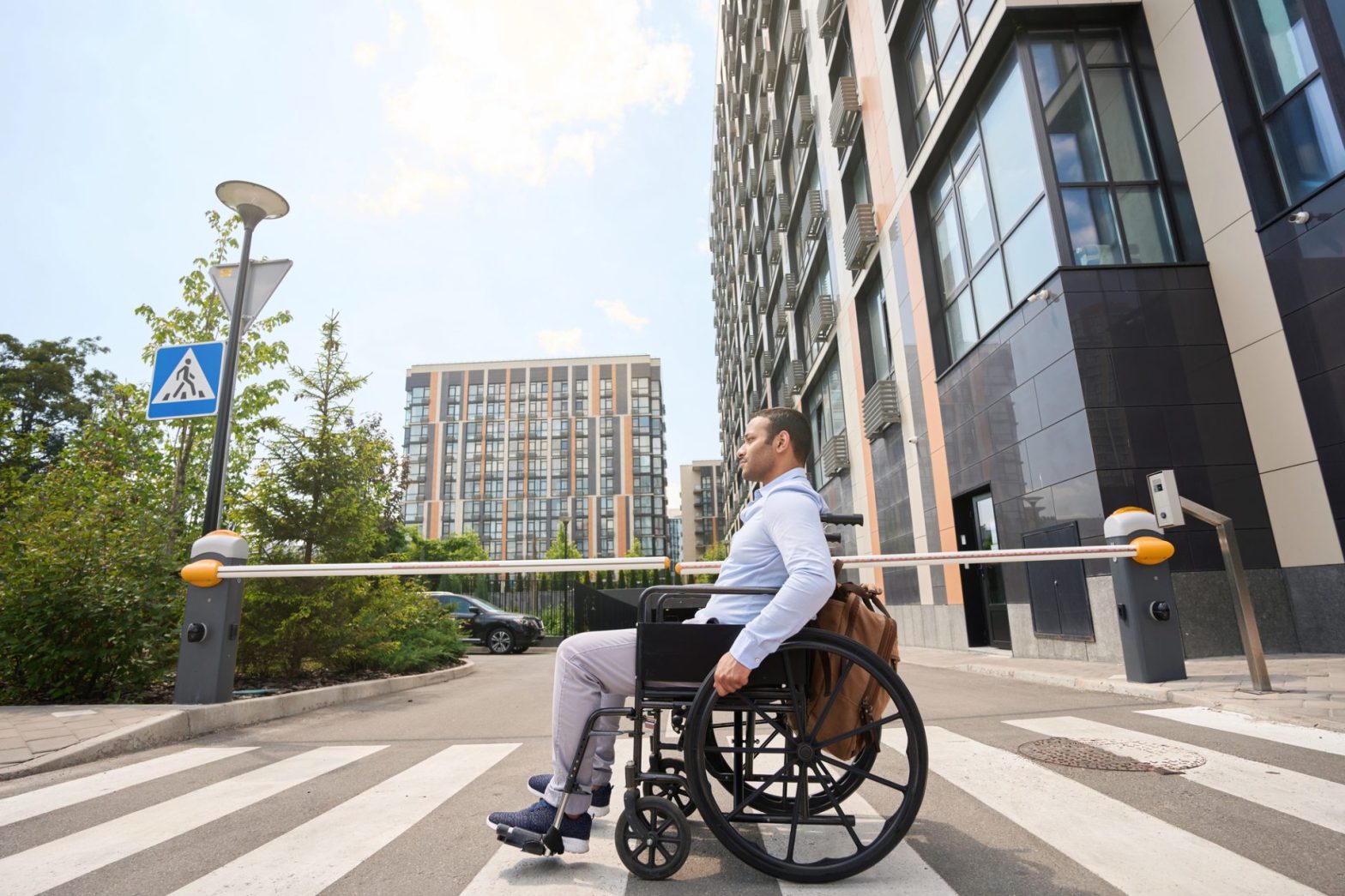
Property owners in New York have a legal responsibility to maintain reasonably safe premises for visitors, customers, tenants, and guests. While many people think that the Americans with Disabilities Act (ADA) is primarily a civil rights law designed to prevent discrimination, ADA compliance can also have a significant effect on personal injury cases.
For example, if you get hurt because an accessibility barrier created a dangerous condition, it’s fair to wonder, “Can a property owner be sued for ADA violations?” Know that while a violation does not automatically make a property owner liable for an injury, evidence of non-compliance can play an important role in establishing negligence and supporting a premises liability case.
Understanding the relationship between property owner responsibility for ADA compliance and negligence is crucial if you plan to seek compensation for your injuries by filing a personal injury claim.
What Is Property Owner Responsibility for ADA Compliance?
The Americans with Disabilities Act requires almost all businesses and public accommodations to provide equal access to individuals with disabilities. It establishes accessibility standards for different aspects of a property, including:
- Parking areas.
- Entrances and exits.
- Wheelchair ramps.
- Sidewalks and walkways.
- Doorways.
- Elevators.
- Restrooms.
- Accessible routes.
- Signage.
Property owners, landlords, business operators, and property managers may all have responsibilities related to accessibility depending on the circumstances and terms of any lease agreement. Failure to meet these requirements can expose them to regulatory enforcement actions, accessibility lawsuits, and, in some cases, personal injury claims.
Common ADA Violations That Lead to Injury Claims
From defective wheelchair ramps to obstructed accessible routes, certain ADA violations lead to more accidents than others. Looking at these common accessibility failures can help injured individuals recognize when an unsafe condition may have contributed to an accident.
- Broken, unsafe, or noncompliant wheelchair ramps.
- Missing or unsafe handrails and railings.
- Inaccessible entrances.
- Hazardous and inaccessible parking areas.
- Improper curb ramps.
- Uneven and inaccessible walkways.
- Inaccessible restrooms.
- Elevator accessibility violations.
These conditions can not only affect individuals with disabilities, but elderly visitors, parents with strollers, delivery personnel, and the general public, too. When an accessibility barrier becomes a safety hazard and ends up causing injury to someone, it can form the basis for a lawsuit.
How Filing an ADA Non-Compliance Injury Lawsuit Works
The ADA is a federal civil rights law, so if you file a lawsuit against a business strictly under Title III regulations in a federal district court, the available remedies are structurally limited. Sure, a federal judge can order the property owner to remove the physical barrier, make the facility accessible, and pay your legal fees. However, this path does not provide monetary damages for pain, suffering, or lost income.
This federal limitation is exactly why you should consider using the services of an experienced New York ADA injury lawyer to frame and file the case under personal injury law. Instead of filing a case against a property owner for a civil rights violation, your lawyer can sue for standard negligence and premises liability, pointing directly to the ADA violations to establish that the property owner fell below the legal baseline of safety.
What helps is that when a property owner fails to comply with the ADA and the failure results in a physical injury, the violation of federal law serves as independent and objective evidence of negligence.
Does an ADA Violation Automatically Establish Liability?
A common misconception is that any ADA violation automatically makes a property owner legally responsible for an injury. The truth is that this is not how New York courts analyze such cases, because when you file a personal injury premises liability lawsuit, you must prove negligence, which requires establishing these elements.
- The property owner owed a duty of care.
- A dangerous condition existed.
- The owner knew or should have known about the condition.
- The owner failed to address the hazard.
- The hazardous condition caused the injury.
Keep in mind that while an ADA violation may provide evidence that a dangerous condition existed, it is usually just one piece of the overall negligence analysis. The good thing is that courts often consider whether non-compliance contributed directly to an accident and whether a reasonably careful property owner would have taken remedial measures.
How ADA Non-Compliance Affects Premises Liability Lawsuits
New York’s premises liability law governs injuries that occur because of dangerous property conditions. According to it, most property owners have a duty to maintain their premises in a reasonably safe condition, and this obligation extends to customers, visitors, tenants, and others lawfully present on the property.
When accessibility barriers create unreasonable risks, injured individuals may seek compensation by filing a premises liability claim. Examples of common premises liability accidents involving ADA non-compliance include:
- Slip and falls.
- Trip and falls.
- Wheelchair accidents.
- Falls from ramps.
- Parking lot accidents.
- Injuries caused by inaccessible entrances.
- Elevator-related injuries.
When courts look at property owner liability for ADA violations, the key question is often whether a property owner acted reasonably in inspecting and maintaining the property.
Who Is Responsible for ADA Compliance: Landlord or Tenant?
When it comes to suffering injury at a property that a business rents from someone else, it might seem difficult to establish who is actually at fault: the landlord who owns the property or the commercial tenant operating the space (such as a restaurant, supermarket, or medical office).
Under federal ADA guidelines, both the landlord and the tenant are strictly responsible for maintaining an accessible facility. The law explicitly states that it’s not possible to avoid or outsource the duty to provide an accessible environment through a private contract. So, how does this work in a New York ADA violation personal injury claim?
The Landlord’s Responsibility
If a structural defect exists on the exterior of a property or within common areas, such as an unmaintained parking lot, a poorly graded entrance ramp, or broken steps leading into a venue, the building owner is typically liable. In New York, a landlord cannot escape liability by claiming they didn’t know their building violated federal code, because they have a non-delegable duty to keep their premises reasonably safe.
The Commercial Tenant’s Responsibility
The business operating within a space is simultaneously responsible for barriers within their immediate control. For instance, if a restaurant places dining tables too close together, blocking an accessible aisleway, or fails to fix a loose grab bar inside a restroom, it’s possible to hold the tenant liable for a resulting fall.
What About Contractors and Property Management Companies?
In some cases, it might be possible to hold contractors who improperly design, construct, or repair accessibility features liable for injuries caused by ADA non-compliance. In others, when management companies oversee inspections, repairs, and maintenance, they may also share responsibility for dangerous conditions.
When suing a property owner for ADA accessibility violations, experienced law firms routinely name both the property owner and the commercial tenant as co-defendants to ensure covering all avenues of insurance coverage on behalf of the injured party.

When ADA Violations Strengthen a Personal Injury Claim
Consider this example. A business installs a wheelchair ramp that is substantially steeper than ADA standards allow. A visitor using a mobility device loses control while descending the ramp and suffers serious injuries. In this situation, the ramp’s failure to meet established safety requirements may help demonstrate that the property owner created an unsafe condition or allowed it to exist.
Similarly, evidence of missing handrails, improperly maintained accessible parking spaces, or obstructed accessibility routes may support arguments that an owner failed to exercise reasonable care. With ADA non-compliance injury lawsuits, accessibility standards often provide a useful benchmark against which a court can evaluate a property’s safety.
Proving That ADA Non-Compliance Caused an Injury
A successful premises liability claim typically requires more than showing that an ADA violation existed. This is because an injured person must establish a connection between the violation and the accident. Common examples include:
- A steep ramp causes a wheelchair accident.
- Missing handrails contribute to a fall.
- Uneven pavement causes a trip and fall injury.
- A dangerous parking area leads to a mobility-related accident.
Winning a case requires providing adequate proof, and evidence can come in the form of:
- Photographs.
- CCTV/surveillance footage.
- Maintenance records.
- Inspection reports.
- Witness statements.
- Expert testimony.
- Medical records.
The Role of Contributory Negligence
New York follows the contributory negligence system, which means that injured individuals may seek compensation even if they share some responsibility for an accident. For example, a defendant may argue that a visitor failed to pay attention to an obvious condition. Even if a court assigns partial fault to the injured person, it might still award damages. In this case, if you’re 20% at fault, the compensation you stand to receive reduces by 20%.
Compensation Available in ADA-Related Injury Cases
If you’ve suffered injury because of dangerous accessibility barriers, you might be able to recover damages for economic and non-economic losses. Potential compensation can cover:
- Emergency treatment.
- Hospital bills.
- Surgeries.
- Physical therapy.
- Rehabilitation.
- Prescription medications.
- Loss of income.
- Emotional distress.
What Property Owners Can Do to Reduce Liability Risks
Preventing accidents is usually far less expensive than defending a premises liability lawsuit, and property owners may reduce risk by implementing a few simple measures.
- Conduct regular accessibility audits.
- Inspect ramps and walkways.
- Repair damaged surfaces promptly.
- Maintain handrails.
- Ensure accessible parking compliance.
- Remove obstacles from accessible routes.
- Train employees to identify hazards.
- Keep detailed maintenance records.
Conclusion
So, can a property owner be liable for injuries caused by ADA non-compliance? In many cases, yes. While an ADA violation does not establish negligence automatically, accessibility failures can serve as powerful evidence that a dangerous condition existed. When non-compliant ramps, inaccessible entrances, uneven walkways, missing handrails, or other accessibility barriers contribute to an accident, injured individuals may have the right to seek compensation under personal injury law.
However, keep in mind that the property owner or business you’re up against might already have a legal team in place, and given how complicated some of these cases can get, it’s ideal that you get in touch with an experienced New York ADA injury attorney at the earliest. By doing this, you’ll know exactly where you stand and how best to proceed.