
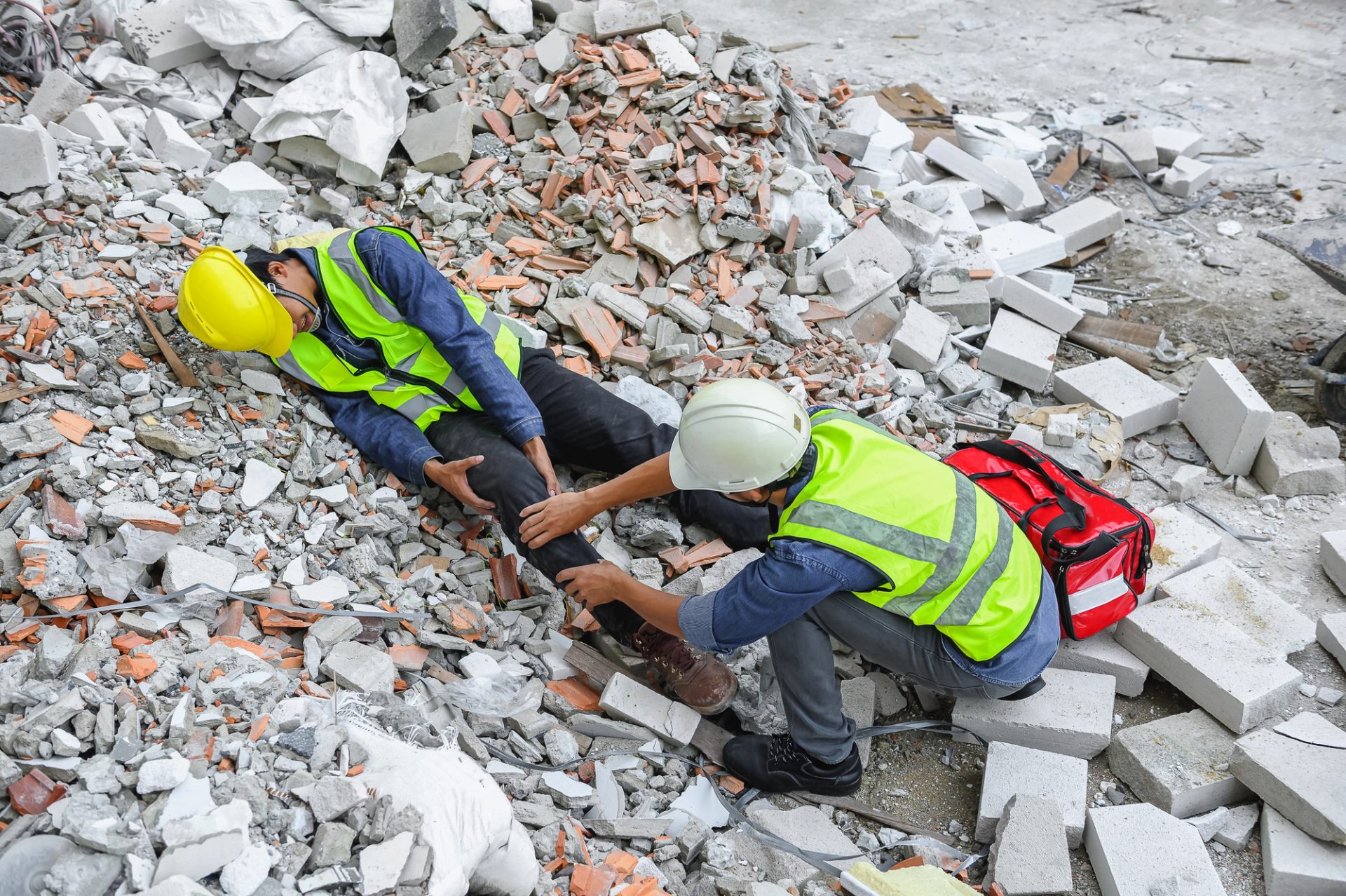
Industrial accidents remain one of the leading causes of serious workplace injuries in New York. Be it a construction site, warehouse, factory, or manufacturing plant, workers face exposure to heavy machinery, hazardous materials, and risky work environments every day. While workers’ compensation provides a basic safety net, it rarely covers the true cost of a life-altering injury.
In many such cases, someone other than the employer contributes to the injury, and this is where third-party liability comes into play. So, how do industrial accident third-party claims work, and might you qualify to receive compensation if you follow this path?
What Is Third-Party Liability in Industrial Accidents?
Third-party liability in industrial accidents arises when a business or an individual other than the injured worker’s employer causes or contributes to a workplace accident. In this scenario, an injured worker may file a third-party personal injury lawsuit, in addition to receiving workers’ compensation benefits. In New York, third-party claims are fairly common across construction and industrial sites where multiple entities operate simultaneously.
Unlike workers’ compensation, which follows a no-fault system, third-party liability lawsuits require proof of negligence or legal responsibility. However, they also allow injured workers to seek full damages, including losses that workers’ compensation does not cover.
Common examples of third-party liability in industrial accidents include:
- Defective machinery or tools.
- Unsafe job site conditions controlled by another party.
- Negligent contractors or vendors.
- Property owners who fail to maintain industrial premises.
- Equipment manufacturers responsible for product defects.
The Exclusive Remedy Trap and the Third-Party Solution
Most New York employees are subject to the exclusive remedy rule. This basically means that workers give up the right to sue their employers for negligence in exchange for guaranteed workers’ compensation benefits.
However, employers rarely run industrial and construction sites on their own. They are ecosystems of general contractors, subcontractors, property owners, equipment manufacturers, and maintenance vendors. So, if someone other than your direct employer causes your injury, you might be able to file a third-party liability industrial accident claim.
Difference Between Workers’ Comp and Third-Party Claims
Understanding the difference between workers’ comp and third-party claims is crucial if you plan to receive adequate compensation for your damages.
Workers’ Compensation
In this case, you don’t have to sue anyone; you only file a workers’ comp claim. In addition, it does not matter who is at fault; you get it even if you are responsible for your injuries.
- Covers all your medical bills for reasonable and necessary treatment.
- Lost wages are typically capped at two-thirds of your average weekly wage in the preceding year, up to a preset maximum.
- No compensation for emotional distress.
Third-Party Liability Claim
In this scenario, you have to file a claim against a negligent third-party, such as a contractor, property owner, or manufacturer, and you must prove negligence on their part.
- You can recover medical expenses as part of a total settlement.
- Compensation can cover the total loss of earnings, including future earning capacity.
- You can seek compensation for emotional distress.
The Trinity of New York Labor Laws
The state has some of the most protective laws in the country for industrial and construction workers. If you are involved in a third-party negligence industrial accident that results in a New York Labor Law lawsuit, your case will likely hinge on one of three statutes.
General Duty of Care
Section 200 under Chapter 31 (Labor), Article 7 of the Consolidated Laws of New York states that it is upon owners and contractors to provide a reasonably safe work environment. To file a claim under this section, you have to prove that the third-party had supervision and control over the work or should have known of the dangerous condition that caused your accident.
The Scaffold Law
The scaffold law, as defined under Section 240 of the NY Labor Law, deals with gravity-related risks. For instance, if you fall from a height or are struck by a falling object that should have been secured, it might be possible to hold the building owner and general contractor liable for the accident.
In some instances, absolute liability can apply, wherein an injured worker does not have to prove a third-party’s negligence, but show that a safety violation resulted in the injury.
Industrial Code Violations
NY Labor Law Section 241(6) allows you to file a third-party liability industrial accident claim or lawsuit if the violation of a specific provision of the New York State Industrial Code led to your injury. Examples include a failure to provide eye protection when required, improper systems for hoisting materials, and poorly-designed shoring.
Who Qualifies as a Third-Party in Workplace Injury Cases?
If you work in a complex industrial setting and are wondering who you can file a third-party injury claim against, know that liability can rest on different shoulders.
Property Owners
Even if property owners are not on-site, New York Labor Law typically holds them responsible for the safety of the premises. When owners or site managers fail to address known hazards or hazards they should have known of, it might be possible to hold them liable under premises liability law. Third-party liability involving property owners may arise from:
- Unsafe flooring or walkways.
- Poor lighting.
- Structural defects.
- Inadequate security.
- Failure to correct dangerous conditions.
General Contractors, Vendors, and Service Providers
Industrial sites often rely on other companies for equipment maintenance, cleaning, inspections, and logistics. If any of them perform their duties negligently, holding them responsible for resulting injuries is possible. Examples include:
- Improper machinery or equipment repairs.
- Negligent safety inspections.
- Unsafe material deliveries.
- Failure to identify hazards during maintenance.
Equipment and Machine Manufacturers
Industrial accidents frequently involve machinery, tools, or equipment. If defective design, manufacturing, or labeling of any of these leads to an accident, you might be able to file a product liability claim against the manufacturer or distributor. Common defective equipment claims include:
- Malfunctioning industrial presses.
- Defective safety guards.
- Faulty forklifts or cranes.
- Power tools that lack proper warnings.
- Defective protective gear.
The Statute of Limitations for Third-Party Claims in NY
The statute of limitations for filing a personal injury New York Labor Law lawsuit stands at three years. However, it is possible to extend this deadline through exceptions that include the discovery rule and tolling. The discovery rule takes into account when you discover an injury, whereas tolling refers to delaying the statute of limitations if a complainant is mentally incapacitated or a minor, or if a defendant is not present in the state during the given time period.
If the third-party you intend to file a claim against or sue is a government agency, you need to file a claim with the agency in question within 90 days from the date of the accident. If 30 days pass without a resolution or if you find the resolution unsatisfactory, you get one year and 90 days to file a lawsuit.
Conclusion
It is common for industrial accident lawsuits to be complicated and fiercely litigated. After all, the companies being sued tend to have big insurance companies by their side as well as risk management teams who do their best to minimize your payout. This is why you need a workplace injury lawyer with experience in handling industrial accident third-party claims by your side.
With the right legal assistance, you don’t have to settle for the bare minimum. You can count on your lawyer to look past your employer and identify the parties responsible for your injury. Then, by presenting strong evidence to prove fault, you may expect to receive the compensation you deserve.