
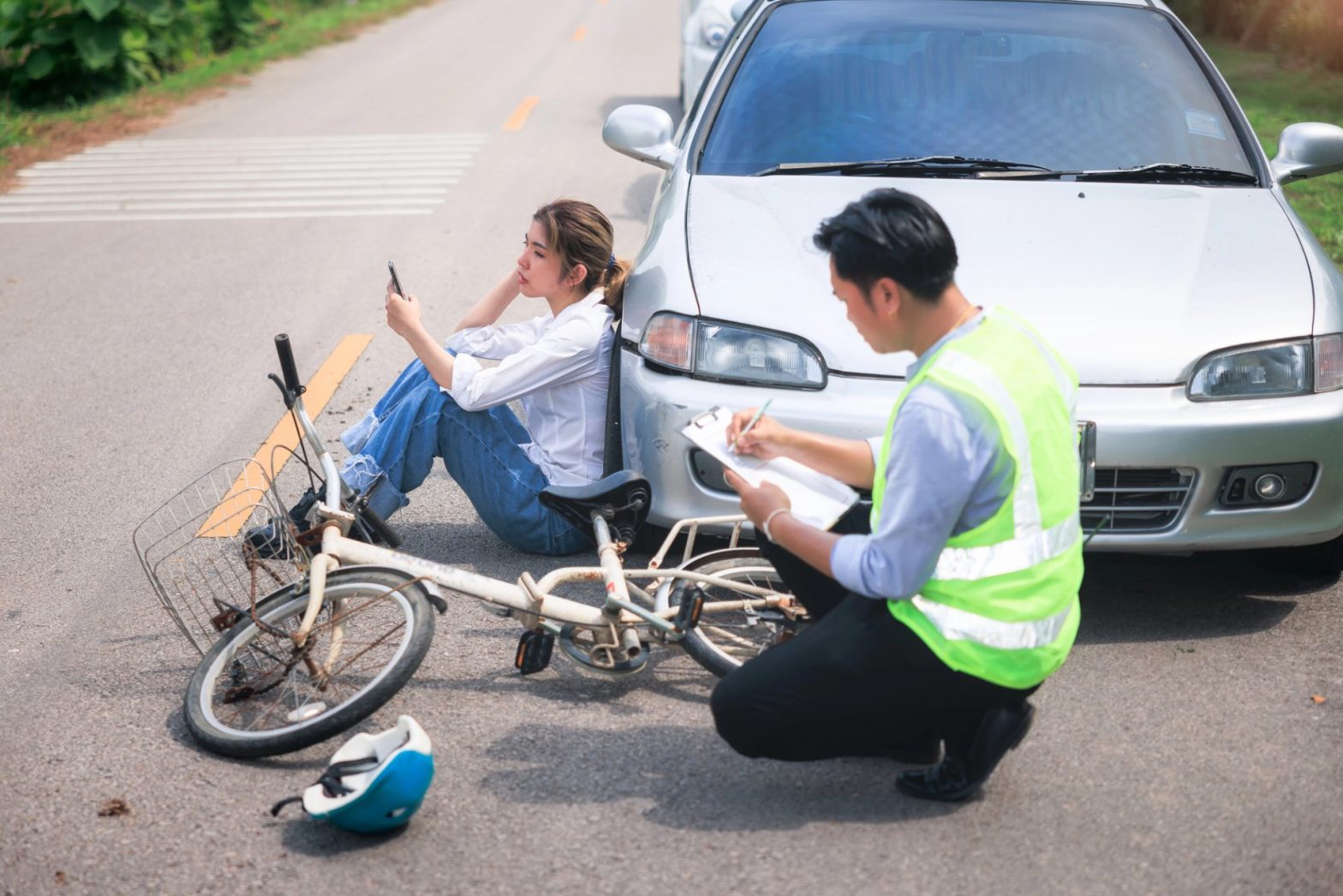
Bicycle crashes across New York are not uncommon, and every so often, there’s a car involved. When any such accident occurs, there’s a possibility that both parties might point fingers at each other. According to the law, determining who is responsible is rarely a simple all-or-nothing proposition. Liability hinges on a patchwork of state statutes, municipal traffic rules, unique insurance frameworks, and contributory negligence principles.
Understanding how these rules operate is crucial for anyone looking at the bicycle vs. car accident comparison.
Why Determining Fault Matters
Fault plays a major role in any personal injury claim. With accidents that involve a car driver and a bicyclist, it might be possible to hold the driver financially liable for the cyclist’s resulting injuries, property damage, lost income, and other losses.
For cyclists, establishing fault can mean recovering compensation for medical bills, rehabilitation expenses, and pain and suffering. From a car driver’s perspective, proving that a cyclist contributed to or caused a crash may help reduce or eliminate liability.
Given that New York follows the contributory negligence system, it’s possible to divide fault among multiple parties. Even when someone is partially responsible, they may still recover damages, although their compensation reduces according to their percentage of fault.
Cyclists and Drivers Share Equivalent Duties
As per New York Vehicle and Traffic Law (VTL) Section 1231, every person riding a bicycle on a roadway has all the rights and is subject to all the duties applicable to the driver of a motor vehicle. This statute helps maintain parity in the bicycle vs. car accident comparison.
- Drivers. Car drivers owe bicyclists the same duty of care they owe any other automobile.
- Cyclists. The law requires cyclists to stop at red lights, obey stop signs, yield when required, and ride in the direction of traffic.
Just who is at fault when a car hits a bike in NY depends on whether one or both parties breached their duty of care through negligence, by failing to exercise the caution a reasonably prudent person would under similar conditions.
What Happens if a Driver Hits a Bicyclist in New York?
When a car driver fails to pay attention or violates traffic regulations, the outcome for a cyclist can be catastrophic. Here are some common scenarios where New York law typically places fault squarely on the driver.
Dooring Incidents
Section 1214 of the VTL implies that car drivers should exercise due caution when opening a door on the side of moving traffic, and they should not leave the doors open for longer than required. Opening a door into an oncoming cyclist’s lane of travel is a direct statutory violation, creating a strong presumption of negligence.
Right Hook and Left Cross Turns
Consider this example. A driver overtakes a cyclist, misjudges their speed, and executes a sharp right turn across the bike lane or shoulder directly in front of the bike. Under NY rules, drivers turning right must yield to straight-moving traffic, which includes bicycles continuing in a bike lane.
What if a driver making an unprotected left turn at an intersection cuts across oncoming traffic and strikes an approaching cyclist? In any such scenario, drivers must yield to oncoming traffic before executing a turn, and failing to spot an oncoming cyclist does not excuse the driver.
Encroaching on Protected Bike Lanes
The law in New York prohibits motor vehicles from driving, idling, or parking in bike lanes, with minor exceptions, such as emergency maneuvers or crossing briefly to turn into an alley or driveway. Hitting a cyclist while encroaching on a marked bike lane typically points fault directly at the motorist.
Distracted or Aggressive Driving
Texting while driving, following too closely (tailgating), or failing to maintain a safe passing distance constitutes actionable negligence. When a motorist tries to squeeze past a cyclist within a narrow lane instead of waiting for a safe gap, it’s possible to hold them liable if an accident occurs.
Can a Cyclist Be at Fault for Hitting a Car in New York?
The short answer to “Can a cyclist be at fault for a car accident in New York?” is yes. Remember that it’s possible to hold cyclists legally responsible, or bear a significant portion of the blame, if their behavior violates state or local traffic statutes. According to New York bicycle accident laws, cyclists must abide by all the laws applicable to motorists and follow all the rules of the road, although some exceptions apply.
Ignoring Traffic Signals
Until New York passes an Idaho Stop law, cyclists must obey traffic lights and stop signs just like all motorists. So, if a cyclist rides through a red light and collides with a vehicle that has the right-of-way, the cyclist may bear significant responsibility for the crash.
Riding Against Traffic
Section 1234 of the VTL makes it illegal to ride a bicycle against the flow of traffic. Keep in mind that drivers pulling out of driveways, parking spaces, or side streets look in the direction of oncoming traffic, and when a cyclist approaches from the wrong direction, they rarely have sufficient time to react.
Night Riding Without Illumination
According to Section 1236 of the VTL, if you ride a bicycle between sunset and sunrise, it should have:
- A front white light visible from at least 500 feet.
- A rear red or amber light visible from at least 300 feet.
- A bell or other device that can produce a signal audible from at least 100 feet.
- Brakes that work.
- Reflective tires or spoke reflectors that meet color specifications.
Riding on Sidewalks
The law in NYC allows only children aged 12 years or younger to ride bicycles on sidewalks. Cyclists darting off sidewalks into crosswalks at high speeds can surprise turning drivers and often share the blame for resulting crashes.
Unpredictable Movements or Distracted Riding
While motorists should anticipate normal bicycle movements, sudden swerving, weaving between vehicles, or unexpectedly entering traffic can create dangerous situations. As a result, if cyclists act unpredictably, they might share partial fault. This is also the case with distracted cycling, examples of which include using a phone, wearing headphones that limit awareness, or otherwise failing to pay attention.
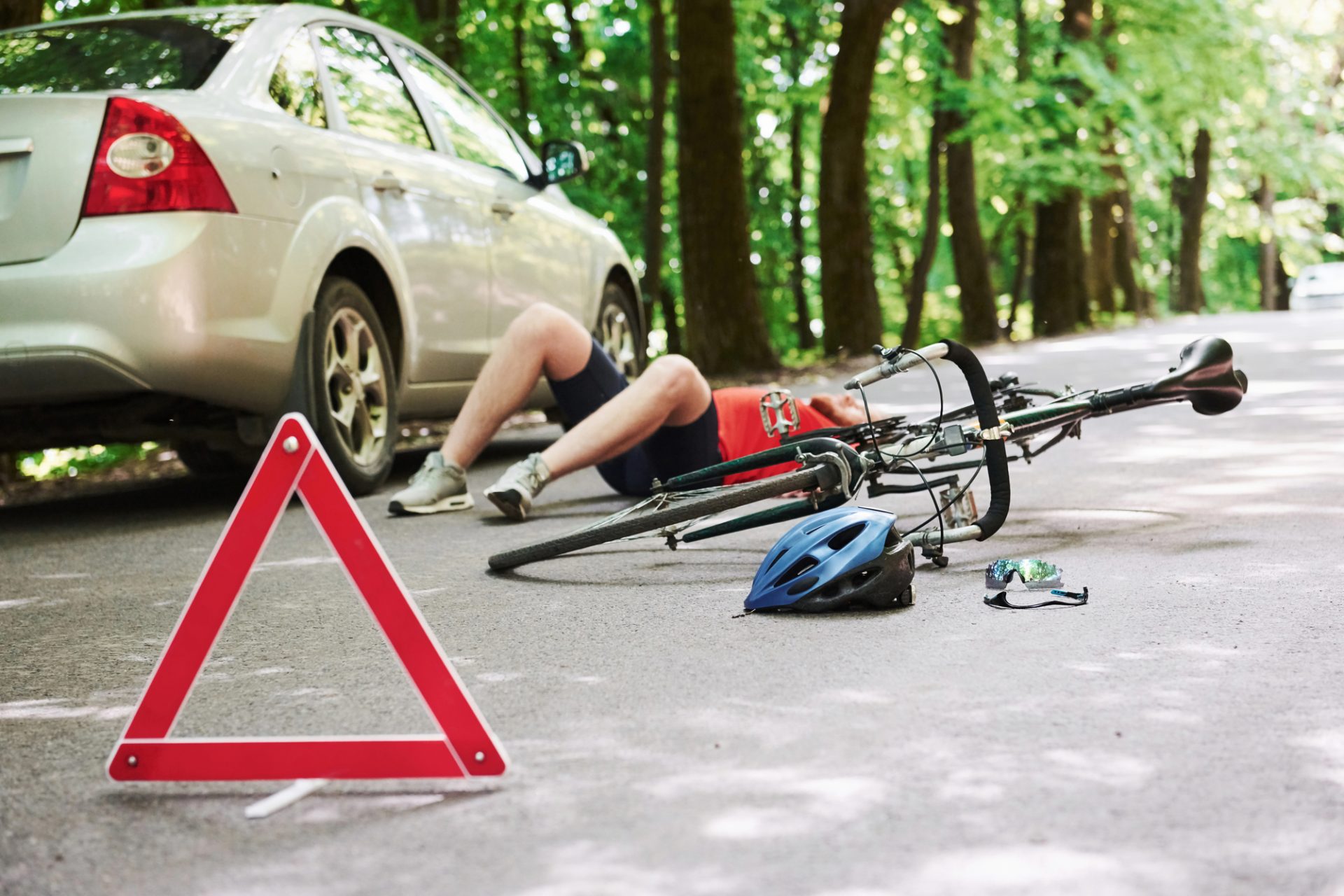
What Happens if a Cyclist Is Partially at Fault in NYC?
New York follows the contributory negligence rule, which means that an injured party’s financial recovery reduces in direct proportion to their share of culpable conduct. For example, a car driver collides with you while turning right without signaling, but you are cycling fast, and your bike’s front brake is broken, so a court assigns 30% of the fault to you. In this case, if you were to get $100,000 as compensation, you’ll end up receiving $70,000 instead.
Does No-Fault Insurance Cover Bicycle Accidents in NY?
New York’s no-fault insurance system provides coverage not just to car drivers but also to cyclists, pedestrians, and passengers. This means that irrespective of who is at fault when a car hits a bike in NY, the no-fault insurance policy of the car that struck the bicycle is responsible for paying the cyclist’s medical expenses, a portion of lost wages, and reasonable out-of-pocket expenses, typically up to the statutory minimum of $50,000.
When it comes to no-fault insurance, it does not matter who caused the crash. Even if a cyclist rushed through a stop sign, the driver’s no-fault carrier must pay initial medical and basic economic benefits.
Is There a Deadline to File a No-Fault Claim?
New York strictly enforces a 30-day deadline from the date of the crash to submit the initial no-fault application (Form NF-2). If you miss this window, the insurance carrier can, and usually will, deny all coverage for medical treatment and lost earnings.
Can a Bicyclist Sue a Driver After an Accident?
No-fault insurance covers only basic economic losses, like medical treatment and partial lost wages. It does not cover property damage or non-economic damages, such as physical pain, emotional distress, or loss of enjoyment of life. To sue a car driver after an accident, you must prove two distinct elements.
- The driver was legally negligent (at least partially).
- You sustained a serious Injury, as defined under NY Insurance Law Section 5102(d).
Given the physical disparity between a car and a bicycle, cyclists involved in collisions frequently meet the serious injury threshold through fractures, joint tears, or head injuries.
What if a Cyclist Is a Victim of a Hit-and-Run?
If a car driver speeds off after striking a bike, or they don’t have auto insurance, a cyclist might still have options for financial protection.
- Household auto insurance. If an injured cyclist owns a car, or lives in the same household with a family member who owns an insured car, they can file an uninsured motorist (UM) claim through the existing auto policy. While UM coverage is part of every auto insurance policy in New York, you might also want to check if the policy carries the optional supplementary uninsured/underinsured motorist (SUM) coverage.
- Motor Vehicle Accident Indemnification Corporation (MVAIC). If an injured cyclist does not own a car, has no insured household relatives, and was the victim of a hit-and-run or uninsured vehicle, they may file a claim through MVAIC. This is a state-mandated safety fund that steps into the shoes of an absent insurance company to provide no-fault and injury benefits.
If you’re the victim of a hit-and-run, the law requires you to report the accident to the police within 24 hours. If you wish to file a claim with MVAIC, you need to do so within 90 days of the accident.
Conclusion
Now that you’ve gone through this bicycle vs. car accident comparison, you should know that determining who is responsible might not be straightforward. Fortunately, New York’s contributory negligence system and no-fault protections ensure that injured parties have a path to financial recovery, even when they are partly at fault.
Keep in mind that serious injury claims often involve disputed liability and complex insurance issues, which is why seeking advice from an experienced bicycle accident attorney is in your best interest.